












Runway 35 Extension Project

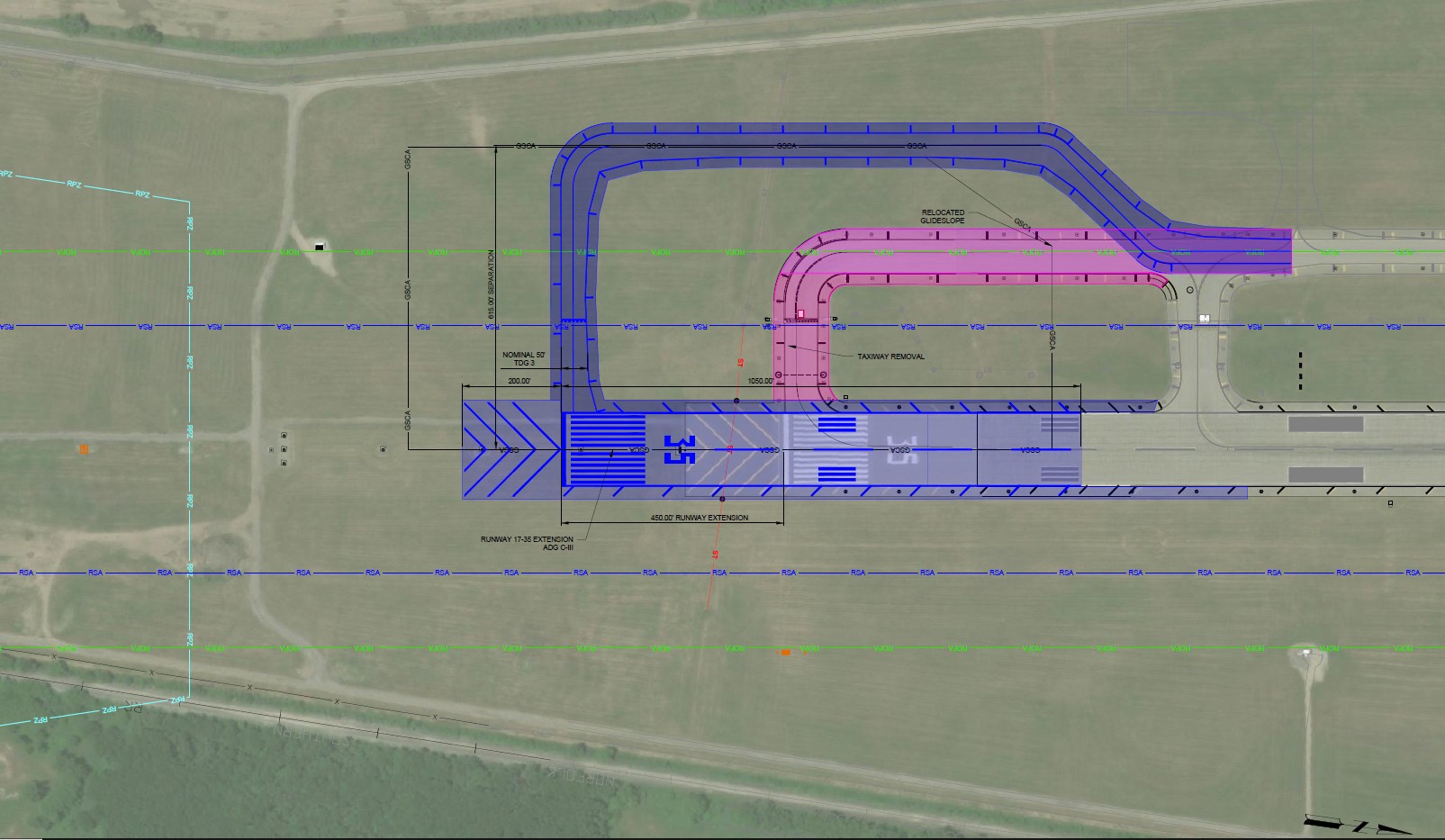
Construction on the Airport’s Runway 17-35 Extension Project will begin on April 27, 2026. This important infrastructure project will extend the runway 450 feet and includes associated improvements such as pavement construction, airfield lighting relocation and installation, grading, drainage enhancements, and safety area upgrades.


To complete critical portions of the work safely and efficiently, the Airport will implement a scheduled 7-day full runway closure during a late phase of construction. During this period, commercial service will be temporarily suspended, however, Runways 5-23 and 9-27 will remain open and available for use.


Outside of the planned 7-day closure of Runway 17-35, the airport will remain operational throughout the construction process, though temporary operational adjustments may occur during certain phases.


The runway extension is a key component of the Airport’s long-term development program. Upon completion, the project will enhance operational safety margins, improve aircraft performance capability, strengthen reliability, and support the Airport’s ability to serve the region well into the future.
Construction Duration

Scheduled Start and Estimated End

Construction will begin on Monday, April 27.

Major construction activities and airfield impacts are expected to conclude mid to late September.

Phase 1

Taxiway B Extension, ILS Relocation, and Surface Grading

Estimated Dates: April 27-August 14 (110 Days)

Runway 17 Declared Distances: TORA, TODA, ASDA, & LDA: 6,152′

Localizer, Glide Slope, and MALSR Out of Service

Taxiway B CLOSED South of B2

Phase 1a

Utility Installation, Stormwater System Improvements, and Taxiway B2 Extension

Estimated Dates: June 6-July 15 (45 days)

Runway 17 Declared Distances: TORA, TODA, ASDA, & LDA: 6,152′

Localizer, Glide Slope, and MALSR Out of Service

Taxiway B CLOSED South of B2

Taxiway B2 CLOSED

Phase 2

Temporary Relocation of Runway 35 Threshold

Estimated Date: August 12 (Overnight)

Runway 17-35: CLOSED *Note the overnight closure will avoid disruptions to scheduled commercial airline operations

Taxiway B CLOSED South of B2

Phase 3

Runway 35 Extension and Utility Relocation

Estimated Dates: August 13 – September 11 (30 Days)

Runway 17 Declared Distances: TORA, TODA, ASDA, & LDA: 5,402′

Runway 35 Declared Distances: TORA, TODA, ASDA, & LDA: 6,002′

Localizer, Glide Slope, and MALSR Out of Service

Taxiway B CLOSED South of B2

Phase 4

Runway 35 Extension Surface Grade Match

Estimated Dates: September 12 – September 19

Runway 17-35: CLOSED

Localizer, Glide Slope, and MALSR Out of Service

Taxiway B CLOSED South of B2

Taxiway B2 CLOSED

Will the terminal remain open to the public during construction?

Yes, the terminal facility will remain open throughout the majority of the runway extension project. Passengers should expect normal terminal operations except during the scheduled 7-day closure of Runway 17-35 (September 12 – 19, 2026), when commercial airline service will be temporarily suspended.

Will commercial flights still operate during construction?

Yes, commercial airline service will continue as scheduled throughout most of the phases of construction. The only exception is during the planned 7-day closure of Runway 17-35. During that period, airline operations will pause temporarily. Service will resume immediately following the reopening of the runway.

I have a trip planned in mid-September. What should I do?

The planned runway closure is estimated to occur September 12-19. As the dates approach, airlines will communicate directly with affected passengers regarding rebooking options and alternate travel arrangements. Passengers are encouraged to monitor their airline communications and check flight status prior to travel.

Will the airport remain open to general aviation during construction?

Yes, the airport will remain open to general aviation throughout most phases of construction. The only full operational interruption will occur during the scheduled 7-day closure of Runway 17-35. During that period, Runways 5-23 and 9-27 will remain open and available for use, subject to weather conditions and operational requirements.

How can I stay informed of runway and taxiway closures and length adjustments?

Surface closures and declared distances will be published via NOTAM and reflected in updated diagrams as required.

Will taxiway routes change?

Temporary taxiway closures or routing adjustments may occur during various construction phases. These changes will be clearly marked following the FAA approved construction safety and phasing plan, and communicated via NOTAM. Pilots should anticipate possible changes to standard taxi routes and exercise heightened situational awareness while operating on the movement area.

Will fuel services or FBO operations be impacted?

FBO services, fueling operations, and tenant access are expected to remain available throughout construction.

Where can pilots find the most current operational information?

Pilots should consult:

  • Current NOTAMs
  • ATIS broadcasts (when applicable)
  • Direct communication with Air Traffic Control
  • Airport-issued tenant updates

Operational details may evolve as construction progresses, and the most current information will always be available through official FAA publications.

Why is the runway being extended?

The extension project was originally identified as an airfield improvement project with the completion of the Airport Master Plan (Click to View) completed in 2012. The plan identified existing airline fleet mix requirements demand 7,000 to 7,500 feet of runway to takeoff at maximum gross weight in conditions that hinder performance without taking concessions in passenger load, cargo, and fuel. It also cited additional runway length in takeoff and landing distance calculations when the runway is contaminated with water, snow, or ice will increase the number of flight delays or cancellations if additional runway length is not made available.

How much does the project cost?

The total project cost is approximately $13 million. The majority of funding is provided through federal grants, with a local match contribution from the Airport. Like most airfield infrastructure projects, funding comes from aviation-specific sources and does not rely on local property taxes.

How much does the project cost?

The total project cost is approximately $13 million. The majority of funding is provided through federal grants, with a local match contribution from the Airport. Like most airfield infrastructure projects, funding comes from aviation-specific sources and does not rely on local property taxes.

Will this project increase noise or lead to more air traffic?

The runway extension is designed to enhance safety and operational flexibility of the aircraft currently serving the Kalamazoo Airport, not to significantly increase traffic levels. Any future changes in activity levels would be driven by market demand and airline decisions, not solely by the runway length.

What are the long-term benefits to the community?

The runway extension enhances safety and operational resilience, supports continued commercial air service, strengthens the airport’s ability to serve business and general aviation users, and represents a long-term infrastructure investment in the region. Airport play a critical role in economic development, connectivity, and emergency response capability, and this project helps ensure the Airport remains a strong regional asset.

Is there a planned extension to the north end?

The Airport has identified a safety project on the north end of Runway 17-35 which involves Taxiway C geometry at the intersection of the runway. This project will be addressed independently from the southern extension project planned for 2026.

Concept Design